

High-Density UBC
Aluminum Scrap.
The Can-to-Can Supply Chain
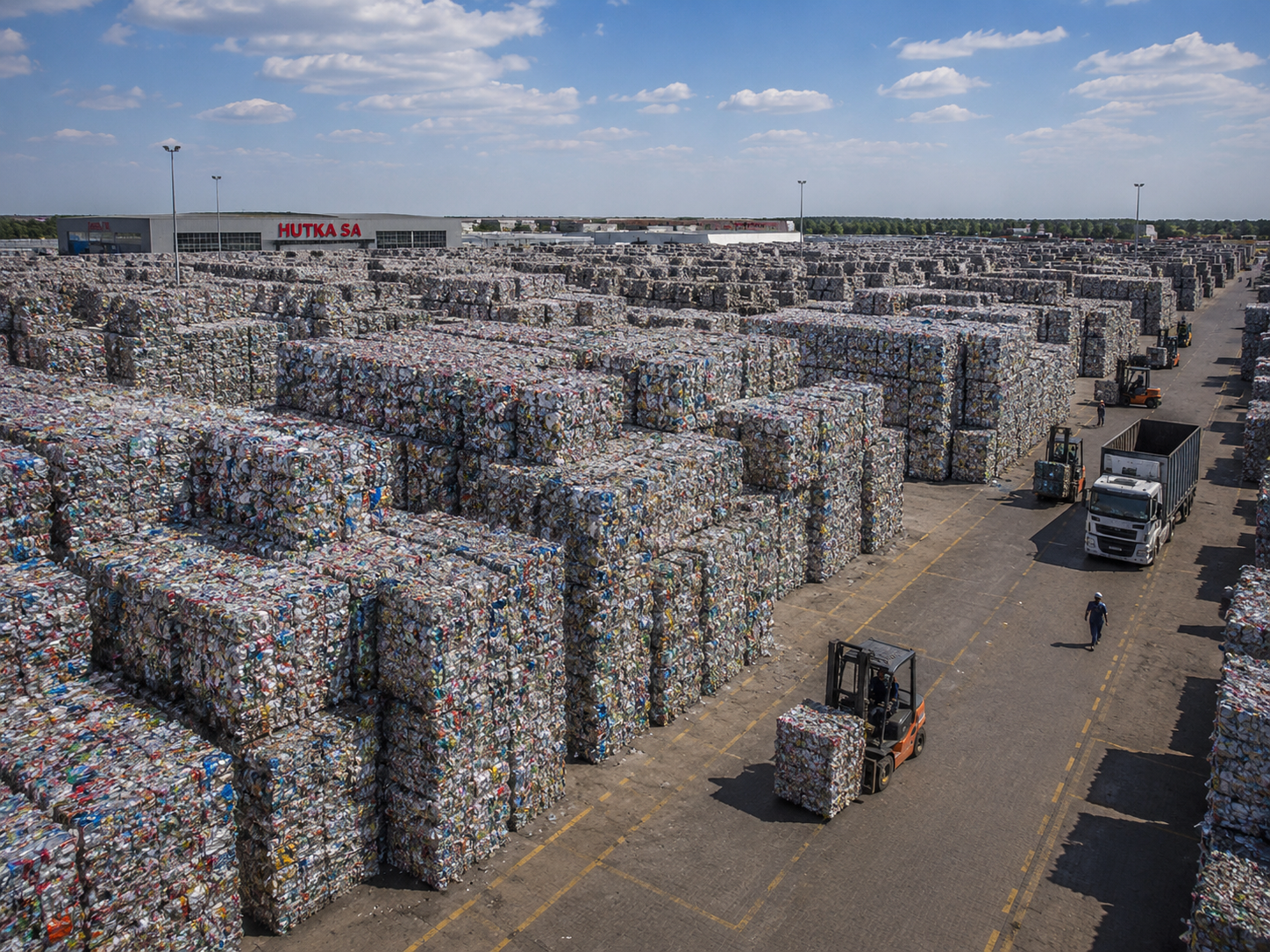
HUTKA SA aggregates, processes, and exports massive volumes of Post-Consumer Used Beverage Cans (UBC), adhering strictly to the ISRI “TALDON” specification. Our UBC scrap serves as a critical, high-yield feedstock for secondary rolling mills and casting foundries globally.
Before baling, our materials pass through aggressive multi-stage sorting. Utilizing magnetic separators and eddy-current technology, we ensure the material is meticulously purged of steel cans, plastics, glass, and residual liquids—guaranteeing maximum recovery yields for our smelting partners.
Material Composition & Tolerances
Our UBC scrap consists almost entirely of 3004 (can body) and 5182 (can top) aluminum alloys. We enforce strict contractual thresholds on moisture and contamination to prevent excess dross formation and metal loss during the decoating and remelting process.
| Base Composition & Yield | |
|---|---|
| Material Profile | Clean, unpainted & painted aluminum cans |
| Alloy Series | 3000 / 5000 Series Aluminum |
| Expected Recovery Yield | 88.0% – 90.0% |
| Bale Density Range | 14 – 17 lbs/cu.ft. (TALDON) |
| Radioactivity | None Detected (0.00 Bq/g) |
| Strict Contamination Limits (%) | |
|---|---|
| Moisture / Liquids | 2.0% Max |
| Dirt / Dust | 1.0% Max |
| Iron / Steel (Magnetic) | 0.0% (Strictly Excluded) |
| Plastics & Glass | 0.0% (Strictly Excluded) |
| Lead / Tin / Antimony | 0.0% (Strictly Excluded) |
Densification & Handling
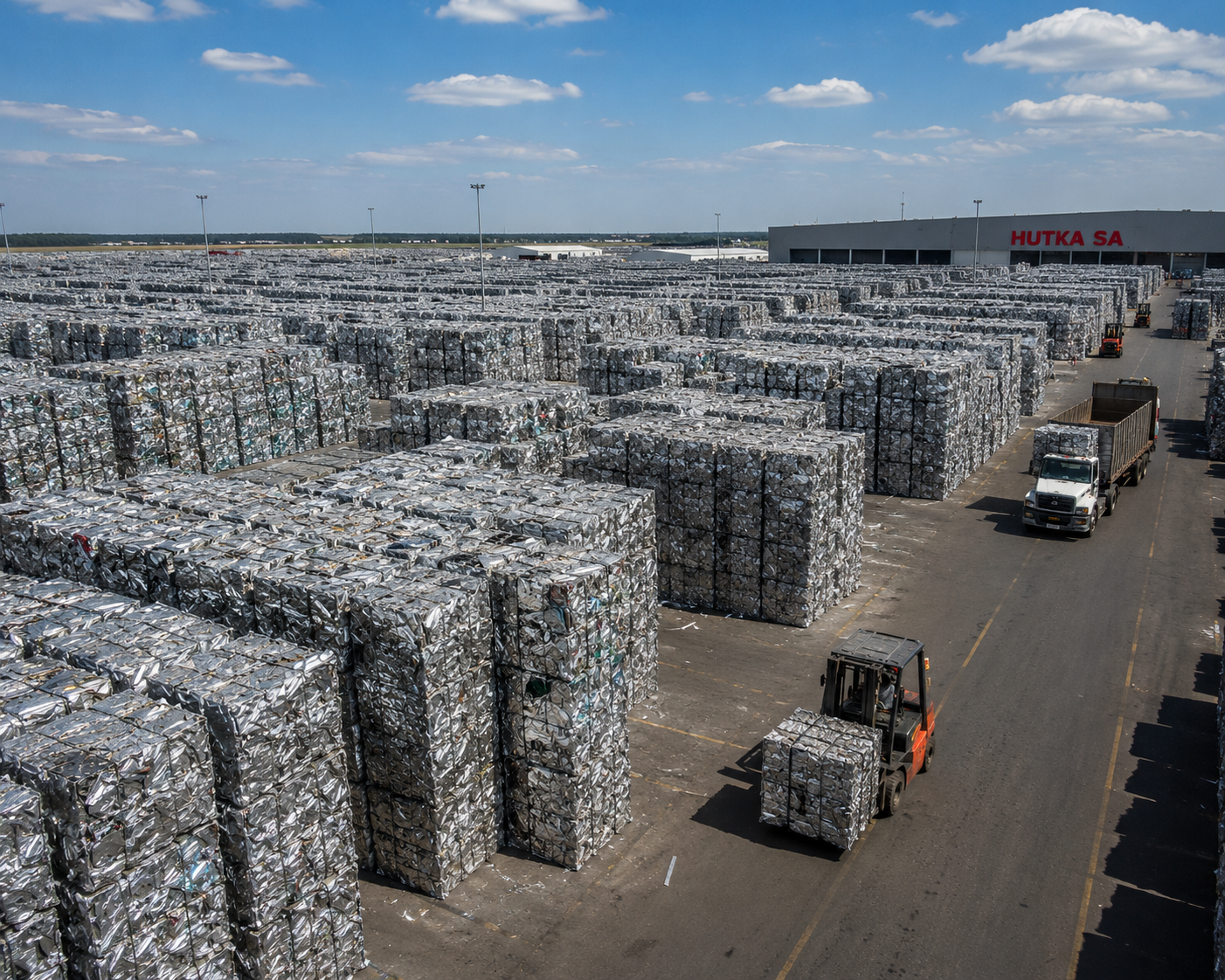
Ocean freight economics require maximum container payloads. HUTKA SA utilizes heavy-duty hydraulic balers and briquetting presses to process loose UBCs into ultra-dense, interlocking cubes.
Once processed, these bales are staged in covered, concrete-floored facilities. This prevents the material from absorbing rainwater, which would artificially inflate the cargo weight and cause dangerous steam expansions during our clients’ remelting process.
The Ultimate Closed-Loop Material
UBC scrap is the pinnacle of the industrial circular economy. Recycling aluminum beverage cans saves 95% of the energy and greenhouse gas emissions required to produce primary aluminum from bauxite ore. A recycled can is typically turned back into a new can and placed on a retail shelf within 60 days. HUTKA SA is proud to aggregate these materials globally, directly supporting the world’s Net-Zero carbon transition.
Processing & Export Protocols
Independent surveyors from BQCIS visually inspect the bales, conduct magnet tests for ferrous contamination, and verify moisture levels to ensure 100% contract compliance.
Hydraulic Baling (TALDON)
UBCs are compressed into high-density bales (approx 500kg – 800kg). They are banded with heavy-duty aluminum wire or plastic strapping (steel strapping is strictly forbidden).
Briquetting (TALDACK)
Alternatively, material can be processed into dense briquettes, which are then stacked and shrink-wrapped onto standard ISPM-15 certified wooden pallets for easy foundry handling.
FCL Containerization
Bales/Briquettes are forklift-loaded into standard 40′ High Cube FCL containers, maximizing payload efficiency at ~22 to 25 Metric Tons per container. Bolt seals are applied immediately.
Standard Commercial Documentation
Every shipment is cleared for international customs with a comprehensive, fully compliant document packet dispatched via express courier to the buyer’s bank or office.
- Commercial Invoice (3 Copies)
- Detailed Packing List
- Full Set Clean on Board Bill of Lading (B/L)
- Certificate of Origin (Chamber of Commerce)
- BQCIS Certificate of Quality (Contamination/Moisture)
- BQCIS Certificate of Weight
- Non-Radioactive Material Certificate
- Insurance Policy / Certificate (If CIF/CIP)
- Export Declaration Forms